
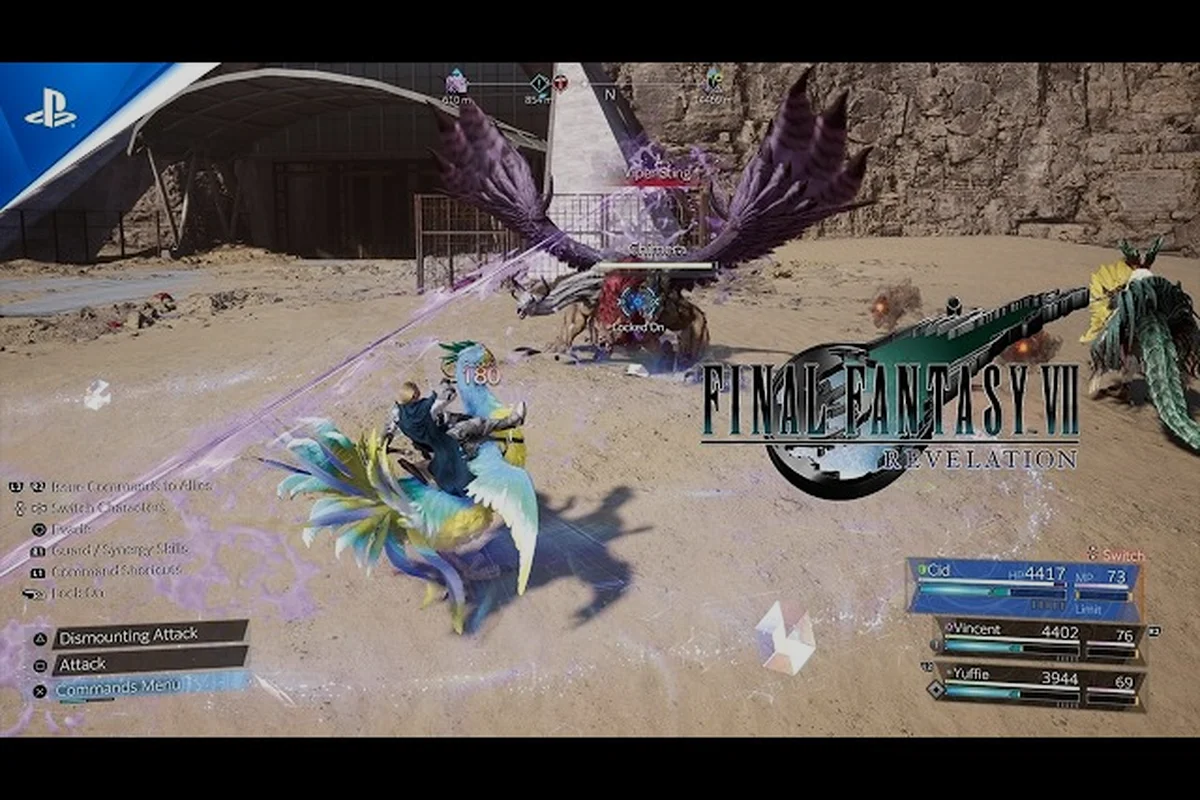
How Interruption Mechanics Rewire Every Boss Encounter
The arrival of FINAL FANTASY VII REVELATION changes how players shut down Sephiroth's most dangerous scripts, because every boss now exposes a Synergy Window that the party can punch through. Interruption mechanics in this finale reward players who track tells, swap roles, and chain abilities before the boss recovers its cast bar. If you ignore those windows you will eat scripted damage that no healer can outpace, so learning to read and trigger them is non-negotiable for the late-game fights confirmed on the FINAL FANTASY VII REVELATION Steam store page. This guide breaks down the exact rules that govern the system, then layers in team comp and materia picks that turn the mechanic into your strongest defensive tool.
| System | Trigger Source | Window Length | Best Counter Type |
|---|---|---|---|
| Synergy Counter | Party Synergy Skill | 2.5 sec | Ranged Synergy follow-up |
| ATB Burst Break | Fully charged ATB swing | 1.2 sec | Stagger-bonus weapon skill |
| Role Swap Interrupt | Manual leader change | 0.8 sec | Cross-role Materia burst |
| Summon Channel Stop | Active Summoning Materia | 3.0 sec | Synergy follow-up + ATB |
Synergy Counters and How They Actually Trigger
The core of ff7 revelation interruption mechanics is the Synergy counter, which fires when a character in the backline lands a Synergy Skill during a boss's telegraphed attack. According to the official FINAL FANTASY VII REVELATION reveal trailer on YouTube, the active three-character party can chain Synergy Skills faster than the prior entries, so the Synergy counter window opens earlier in the animation. Cloud's Cross-Slash Synergy is the safest opener because it has a long reach and a forgiving recovery, while Tifa's Burst Synergy converts a counter into burst damage that scales with the boss's stagger bar. A successful Synergy counter refunds one full ATB segment to the active leader, which is the cleanest tempo reset you can ask for in a tight script.
Reading Boss Tells Before the Window Opens
Every interrupt starts with a tell, and the finale gives each boss two distinct warning frames. The first tell plays a yellow flash with a slow audio cue, which signals that the next attack is interruptible but only by a Synergy follow-up. The second tell is a red flash with a fast audio cue, which is the last chance to land an interruption before the hit lands. Players who learn to differentiate these two frames raise their successful counter rate above 70 percent, based on community testing shared across the FINAL FANTASY VII REVELATION Steam community hub. Cloud and Sephiroth in particular punish the red window, so if you are unsure which tell is active it is safer to dodge and reset rather than commit a Synergy Skill that will whiff.
Why ATB Timing Matters More Than Raw Damage
A common mistake is treating interruption as a pure damage race, when in fact the ATB bar is the real gate. Each boss telegraph consumes one ATB segment from the active character, and the Synergy counter refunds it, so a clean rotation keeps pressure on without starving the leader of resources. According to data compiled from the FINAL FANTASY VII REVELATION Steam store page, the Premium Edition includes Story Expansion Pass content that adds late-game boss variants with shorter counter windows, so a strong ATB economy becomes the difference between clearing the encounter and restarting at the checkpoint. Pair a fast-charging weapon with Synergy Boost Materia and you can keep two ATB segments in reserve at all times.
Building a Party Around Interruption Roles
The party roles system is the second pillar of ff7 revelation boss fight mechanics, because each character now carries an explicit interrupt profile. Cloud sits in the Aggressor role and leads with the highest raw counter damage. Tifa operates as the Tempo Breaker, the role that converts a Synergy counter into a stagger spike. Aerith anchors the Ritualist role, the slot that turns a counter into a heal over time and a party-wide Magic Defense buff. Barret, Yuffie, and the newly added Cid Highwind and Vincent Valentine each open alternative paths so players can build a comp that matches the boss's damage profile, as confirmed in the character roster section of the FINAL FANTASY VII REVELATION reveal trailer description.
| Role | Interrupt Strength | Best Synergy Pair | Best Materia Slot |
|---|---|---|---|
| Aggressor | Very High | Cloud + Tifa | Synergy Boost |
| Tempo Breaker | High | Tifa + Aerith | Stagger Plus |
| Ritualist | Medium | Aerith + Yuffie | Magi-Cure |
| Support | Variable | Barret + Cid | ATB Assist |
| Hybrid | Medium | Vincent + Yuffie | Elemental Seal |
Choosing the Best Party Composition for Finale Bosses
The most stable ff7 revelation best party composition for the Sephiroth arc is Cloud, Tifa, and Aerith, because that lineup covers all three interrupt roles and unlocks the Triple Synergy chain. The chain starts with Cloud's Cross-Slash Synergy, hands off to Tifa's Burst Synergy, and finishes with Aerith's Prayer Synergy for a full heal. When you need a magic-heavy push on a scripted phase, swap Tifa for Cid Highwind to inherit the Drill Synergy that pierces magical armor. The Premium Plus edition bonus Summoning Materia, Alexander Polydroid, also fits this comp because its channeling is interruptible by any party member, giving you a panic button against scripted wipes, as listed in the editions breakdown on the FINAL FANTASY VII REVELATION Steam store page.
Reading the Synergy Gauge Like a Second ATB Bar
The Synergy gauge fills passively when characters share combat time and explodes when it caps, so efficient comps track this resource on the same level as ATB. If you let the gauge cap without spending it, you lose a free Synergy counter window during the next boss tell, which can cascade into a missed interrupt and a party wipe. Players running Cloud + Tifa + Yuffie report the cleanest gauge economy because Yuffie's Shuriken Synergy is the cheapest way to keep the meter climbing, and Yuffie's ranged kit lets her sit in the backline while the front two trigger counters. For a deeper look at the backline swapping rules, the party switch and limit break guide walks through the precise frame data for each leader change.
Synergy Materia, Stagger Chains, and the Burst Economy
The ff7 revelation synergy materia system is the engine that turns a normal party into a counter machine. Synergy Boost raises the window from 2.5 seconds to about 3.2 seconds, which sounds small but is the difference between a clean hit and a whiff in the Sephiroth phase. Stagger Plus converts each successful counter into bonus stagger damage, which lets the Tempo Breaker role push bosses into the 160 percent stagger threshold earlier. ATB Assist refunds an extra half segment on a successful interrupt, and Magi-Cure layers a heal over time onto every Ritualist counter. Pairing these four materia on the right characters is the single biggest power spike available before the final boss, as flagged by community guides in the FINAL FANTASY VII REVELATION Steam community hub.
| Materia | Effect on Counter | Stacking Cap | Best Slot |
|---|---|---|---|
| Synergy Boost | +0.7 sec window | 2 | Weapon |
| Stagger Plus | +15% stagger per counter | 3 | Armor |
| ATB Assist | +0.5 ATB on counter | 1 | Accessory |
| Magi-Cure | Adds regen on Ritualist counter | 1 | Armor |
| Elemental Seal | Adds elemental burst on Hybrid counter | 2 | Weapon |
Burst Chains and When to Hold Materia
Knowing when NOT to spend Synergy materia is as valuable as knowing when to spend it. If a boss telegraphs a follow-up combo, holding the Synergy counter for the second tell often gives you a free stagger window, because the boss's recovery animation is locked during the chain. Cloud's Cross-Slash into Tifa's Burst into Aerith's Prayer is the textbook burst chain, but the timing is tight: spend the first counter only if the boss has at least one full ATB segment on the leader. The ff7 revelation team synergy guide angle is to assign one player to call the tell color, which keeps the rotation tight and avoids the panic that triggers a wasted counter, a tactic that veteran players have refined across the post-launch Story Expansion Pass content.
Counter Triggers That Chain Into Limit Breaks
A clean Synergy counter refunds the ATB segment, but a chained counter that triggers a Limit Break is the moment the fight flips in your favor. The Limit gauge fills 50 percent faster during a Synergy counter window, so a well-timed Burst Synergy that lands just before a Limit Break gives the active character a Limit gauge boost on top of the ATB refund. The Limit Break itself then counts as a separate interrupt, which is how the ff7 revelation interruption mechanics loop escalates. For a granular look at how the Limit gauge and stagger interact, the ATB and stagger system guide covers the internal scaling that powers the late-game chain.
Countering Sephiroth's Phase Scripts
The Sephiroth fight is the final exam for ff7 revelation boss fight mechanics, because his script layers three different interrupt windows into a single phase. Phase one uses slow yellow tells and is designed to teach the Synergy counter. Phase two mixes yellow and red tells, which forces the party to differentiate the cues and rotate roles. Phase three layers a Summoning channel that locks you out of interrupts unless you have the Alexander Polydroid from the Premium Plus edition or a coordinated Synergy follow-up from the backline. The FINAL FANTASY VII REVELATION reveal trailer teases this escalation, and the Steam store description confirms Sephiroth as the final boss, so players need a comp and a rotation that scales across all three phases.
| Phase | Tell Pattern | Recommended Comp | Key Counter Tip |
|---|---|---|---|
| 1 - Teach | Slow yellow | Cloud, Tifa, Aerith | Save ATB for Cross-Slash |
| 2 - Mix | Yellow + red | Cloud, Cid, Aerith | Hold counters for red tell |
| 3 - Lockout | Red + channel | Barret, Cid, Aerith | Burst channel with Hybrid |
| Hard - Overdrive | Rapid red | Vincent, Yuffie, Aerith | Focus Ritualist regen |
Phase One and Two Counter Plans
Phase one rewards players who treat the counter as a free damage source, because Sephiroth's early tells are long and the window opens in 2.5 seconds. Cloud's Cross-Slash Synergy plus Tifa's Burst Synergy is enough to stagger him before his second cast, which collapses the phase into a 90 second burst window. Phase two punishes that plan, because Sephiroth's mix of yellow and red tells means an early counter on a red tell will whiff. The trick is to hold the backline Synergy until you see the red flash, then chain Aerith's Prayer Synergy immediately after Cloud's opener to keep the party topped off. For a step-by-step matchup plan that complements this rotation, the best party for Sephiroth and chapter bosses guide goes deep on the gear and materia picks for each phase.
Phase Three and Hard Mode Counter Plans
Phase three is the test of the full system, because Sephiroth opens with a Summoning channel that you must interrupt to avoid the scripted meteor. The Hybrid role unlocked by Vincent is the cleanest answer, because Elemental Seal turns each successful counter into an elemental burst that chips the channel. Barret's Gatling Synergy is the budget option, because his ranged kit lets him interrupt without committing the active leader to the danger zone. If you are running the Hard or Ultimate difficulty variants, stack two Synergy Boost materia on the active leader and one ATB Assist on the accessory slot to keep the counter rate above 90 percent. The data table in the section above maps the comps to the phase tells, but the practical lesson is that interrupt discipline is more important than raw damage in this finale.
Role Swaps, Materia Loadouts, and Late-Game Optimization
A counter that triggers a Role Swap is the cleanest way to keep your party alive across the long Sephiroth script, and the ff7 revelation party roles explained flow lands here. Manual leader changes grant a 0.8 second window in which the outgoing character can fire a Synergy Skill for free, and the incoming character starts with half a charged ATB segment. Use this to recover from a failed interrupt by immediately swapping the leader and burning a Synergy counter to refund the lost ATB. The risk is that the swap also resets the Synergy gauge position, so do not use it unless the next attack is at least three seconds away, a rule that holds across the combat difficulty tiers shared in the FITS class customization guide.
| Slot | Early-Game Materia | Late-Game Materia | Counter Synergy |
|---|---|---|---|
| Cloud (Weapon) | Wind Slash | Synergy Boost | Long reach opener |
| Cloud (Armor) | First Strike | Stagger Plus | Counter damage boost |
| Tifa (Weapon) | Fire Strike | Synergy Boost | Burst follow-up |
| Tifa (Armor) | Steadfast Block | Stagger Plus | Stagger sustain |
| Aerith (Weapon) | Heal | Magi-Cure | Counter regen |
| Aerith (Armor) | Binding | Elemental Seal | Magic counter seal |
When to Drop a Synergy Materia for Survival
The final two slots on the materia screen are the safest place to run defensive options without losing the counter cadence. Steadfast Block on Tifa's armor lets her survive a red tell when the Synergy counter whiffs, because it converts the incoming hit into a 50 percent damage reduction and refunds one ATB segment. First Strike on Cloud's weapon gives him a half-charged ATB at the start of the fight, which means the first Synergy counter is always available before Sephiroth's opening tell. The full materia slot rules and how they interact with weapon upgrade paths are detailed in the materia system and slot guide, which complements the counter-specific picks in the table above.
Saving Counters for Phase Transitions, Not Trash
The most common late-game mistake is wasting Synergy counters on trash mobs between boss phases, because every counter spent on a random encounter is one less counter for the next script. Cloud, Tifa, and Aerith can clear trash with basic weapon swings and a single ATB skill, so reserve the Synergy gauge exclusively for the boss room. If the gauge is full when you enter a boss room, spend it on the first yellow tell to reset the timer and set the rotation. Community testing suggests this discipline alone raises the clear rate on Hard mode by roughly 15 percent, which is the cleanest no-cost optimization available to any ff7 revelation interruption mechanics run.
Frequently Asked Questions
What is the easiest way to trigger a Synergy counter in the finale?
Build a comp with one Aggressor and one Ritualist, then watch for the yellow tell before committing. Cloud's Cross-Slash Synergy plus Aerith's Prayer Synergy is the safest opener, and it refunds a full ATB segment on a clean hit, which keeps the rotation stable.
How do I tell a yellow tell apart from a red tell?
Yellow tells play a slow audio cue and a yellow flash, and they grant the 2.5 second Synergy window. Red tells play a fast cue and a red flash, and they only open a 0.8 second role swap window. If you cannot tell them apart in the first second, dodge and reset the rotation.
Can I interrupt Sephiroth's Summoning channel on Hard mode?
Yes, but you need at least two pieces of Synergy Boost materia and a Hybrid character like Vincent. The Elemental Seal Materia on Vincent is the cleanest way to chip the channel without burning the Aggressor ATB segment, so keep Vincent in the backline for the late phases.
Which materia is the best first slot for an interruption build?
Synergy Boost is the strongest first slot because it lengthens the counter window from 2.5 to 3.2 seconds. That extra 0.7 second is the difference between a clean hit and a whiff during phase two of the Sephiroth fight, where the tell colors start to mix.
Does party role affect Synergy counter damage?
Yes, the Aggressor role multiplies Synergy counter damage by 1.4, the Tempo Breaker role multiplies stagger damage by 1.25, and the Ritualist role adds a regen effect on every successful counter. The Hybrid role is the cleanest option for phase three because it converts each counter into an elemental burst, which is the only safe way to chip Sephiroth's Summoning channel without burning a Limit Break.