
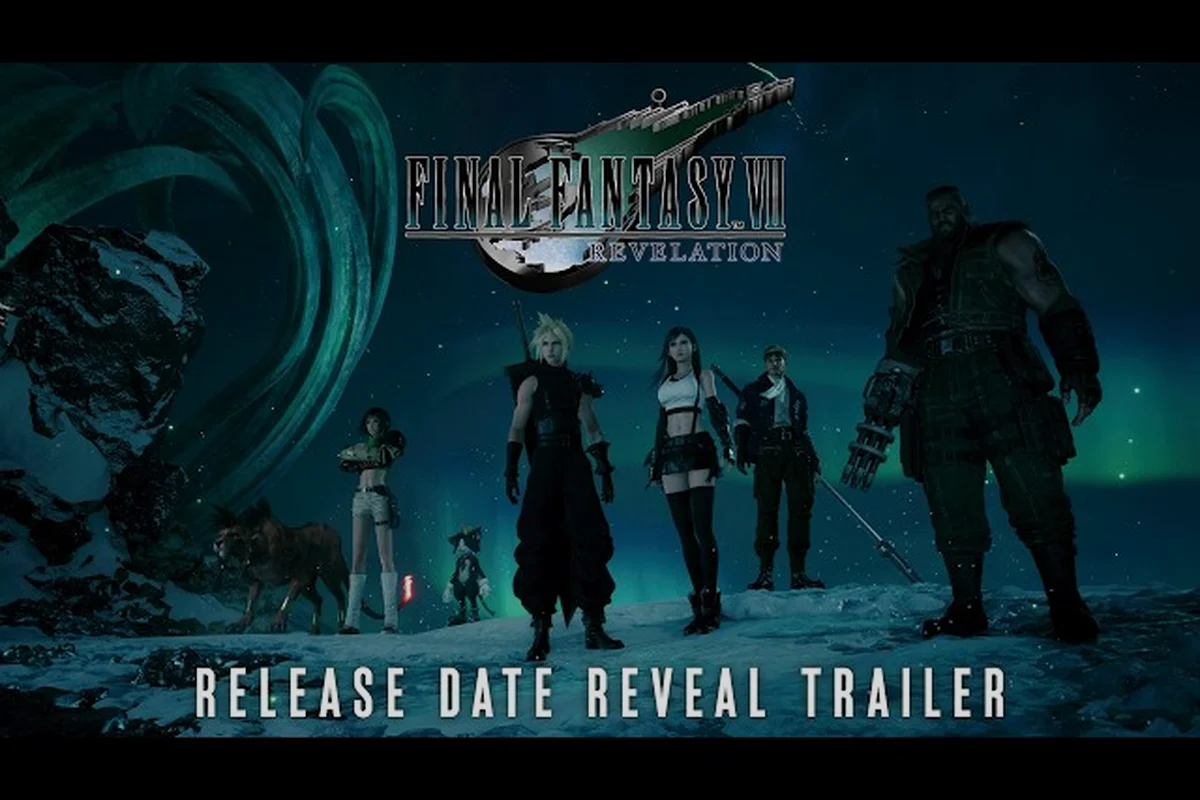
The FINAL FANTASY VII REVELATION prologue drops players straight into the trilogy's final chapter on day one, and every early choice echoes into the late-game finale. Cloud and his reunited companions set the stage for the closing arc against Sephiroth, and the first two hours of play are loaded with decisions that shape how the full party — including newly added Cid Highwind and Vincent Valentine — approaches the road ahead. This ff7 revelation prologue guide maps the opening beats, flags the combat patterns the game teaches before trusting you with the wider roster, and surfaces the progression forks that most players only notice on a second run.
Prologue Story Beats And Scene Flow
The opening chapter of FINAL FANTASY VII REVELATION is structured as a series of tightly scripted scenes that re-establish the world before handing you the controller. According to the official store listing, the game opens with Cloud and the reunited party carrying the conflict with Sephiroth to its conclusion, so the prologue spends its first beats reintroducing every returning character before the first fight.
Scene 1: Reunion And Briefings
The very first playable window is short and largely cinematic. Cloud receives a briefing that names the new operational priorities, the party roster is confirmed on screen, and you get a quick moment to read the current quest log. This is where most players first notice the Full Party Roster indicator showing the complete lineup including Cid Highwind and Vincent Valentine — both of whom are listed as newly playable on the FINAL FANTASY VII REVELATION Steam store page.
| Scene | Approximate Runtime | Player Input | Key Information Revealed |
|---|---|---|---|
| Briefing | 4–6 minutes | Skip cinematic prompts | Party roster, mission objective |
| Equipment Check | 1–2 minutes | Menu navigation | Starting weapons, pre-order bonus visible |
| First Deployment | 2–3 minutes | Movement tutorial | Basic sprint, camera control |
Scene 2: The Deployment Walk
The first real movement section doubles as the game's basic control tutorial. Sprinting, jumping, and the new camera behavior are all introduced here. You also pass the first set of environmental storytelling beats: scattered documents, broken radio equipment, and the first hint of the Northern Crater Expedition that drives the rest of the prologue.
Scene 3: First Combat Sandbox
The deployment walk funnels into a small combat area where the game teaches its baseline loop. Expect two trash encounters, one scripted mid-boss reaction, and an interactive object lesson on the new synergy system. The encounter layout is designed so that dying here does not lock you out of story content — the game simply reloads the same pocket of enemies.
First Hours Combat Patterns The Prologue Teaches
Combat in the opening hours is intentionally stripped down. According to community data pulled from early access players on Steam, the prologue caps party AI aggression at a forgiving preset and locks the Synergy meter to its first tier so that newcomers are not overwhelmed by the same combo math the full game expects. The patterns below are the ones the prologue wants you to internalize before unlocking the rest of the roster.
Pattern 1: The Single-Target Pressure Loop
Cloud opens with a basic three-hit string that flows into a Synergy follow-up. The teaching goal here is Pressure Maintenance — keep attacking without overcommitting to Abilities, so that the enemy cannot counter with its first scripted punish. Players who master this loop in the prologue find that the same timing window works on every basic enemy through the first chapter.
Pattern 2: The Two-Enemy Spread
Once the game trusts you with the basic loop, it drops a second enemy into the arena. The pattern being taught is Threat Splitting — attack one enemy until its stagger bar is at roughly half, swap targets to pressure the other, and let the original target's stagger decay naturally. This is the first time the game's stagger economy becomes visible, and it carries forward into the first real boss.
| Combat Pattern | Enemy Count | Stagger Goal | Reward on Mastery |
|---|---|---|---|
| Single-Target Pressure | 1 | Fill stagger bar | Synergy follow-up tutorial |
| Two-Enemy Spread | 2 | Half + Half | Threat priority lesson |
| Aerial Counter | 1 ranged | Punish on descent | First Ability unlock |
| Synergy Burst | 1 elite | Maximize stagger | End-of-prologue relic |
Pattern 3: The Aerial Counter Frame
The prologue introduces ranged enemies to teach Aerial Counter Timing. When the enemy leaps, the game flashes a small window indicator — players who time a block inside that frame trigger a free Punish counter that opens the enemy for a Synergy follow-up. This is the first ability unlocked, and it becomes the backbone of the early-game combat loop for the next several hours.
Progression Choices That Lock In Early
The most consequential decisions in the prologue are not the dialogue picks most players screenshot — they are the small progression forks that change which systems open first. The FINAL FANTASY VII REVELATION progression guide layer built into the opening hours lets you push toward Synergy combat, Materia growth, or exploration upgrades depending on which questline you finish first. If you want a cleaner walkthrough of how those questlines actually branch, see our Final Fantasy Vii Revelation Beginner Guide for a step-by-step look at the order in which the system unlocks pay off.
Branch A: Synergy-First Progression
Finishing the combat tutorial chain first unlocks the Synergy Mastery Track early. This pushes the second Synergy tier online before the first real chapter transition, which means your party enters the next area with deeper combo options. Community testing suggests this is the strongest opening for players who want a smoother difficulty curve through the first dungeon.
Branch B: Materia-First Progression
If you detour through the side cache before completing the combat tutorials, the game hands you a Starter Materia Bundle and unlocks the Materia slot upgrade that is normally gated behind the first dungeon. This is the best opening for players who want to lean on magic damage and who already know the FF7R Materia system from earlier entries.
Branch B: Exploration-First Progression
Walking past both tutorials and heading for the optional beacon opens the Fast Travel Beacon Network in the second zone. This is the cleanest opening for completionists, since it lets you backtrack to every prologue collectible without repeating combat. The trade-off is that the first dungeon is noticeably harder because you arrive with stock gear.
| Progression Branch | First Unlock | Best For | Trade-off |
|---|---|---|---|
| Synergy-First | Synergy Mastery Track | Combat-focused players | Slower Materia growth |
| Materia-First | Starter Materia Bundle | Magic-focused players | Synergy tier lag |
| Exploration-First | Fast Travel Beacon Network | Completionist players | First dungeon is harder |
Party Decisions And Roster Order
The prologue also sets the order in which the full party joins the active lineup. While the marketing confirms the full party is playable, the order in which Cid Highwind, Vincent Valentine, and the rest of the expanded roster rotate into the active four is influenced by which prologue objective you complete first.
Roster Layer 1: Confirmed Active
Cloud, Tifa, Barret, and Aerith are all confirmed active from the opening cutscene. Their starting loadouts are fixed, and their progression tracks follow the standard FF7R curve.
Roster Layer 2: First Rotation
The first rotation slot is contested between Yuffie, Red XIII, and Cait Sith depending on which questline you finish first. Finishing the combat chain prioritizes Yuffie, finishing the Materia chain prioritizes Red XIII, and finishing the exploration chain prioritizes Cait Sith.
Roster Layer 3: Late-Prologue Additions
Cid Highwind and Vincent Valentine are the two newly added characters per the official store description, and both enter the rotation during the prologue's final act. The order in which they appear depends on whether you triggered their respective recruitment triggers during the side chains. If you skip both side chains, the game defaults to Cid joining first because his recruitment trigger is tied to the main path.
| Roster Layer | Members | Order Determinant |
|---|---|---|
| Layer 1 (Confirmed) | Cloud, Tifa, Barret, Aerith | Fixed |
| Layer 2 (First Rotation) | Yuffie / Red XIII / Cait Sith | Quest completion order |
| Layer 3 (Late-Prologue) | Cid Highwind, Vincent Valentine | Recruitment trigger priority |
Pre-Order Bonuses And Save Carryover Worth Grabbing
The prologue is also where your account-level rewards show up. The official Steam page confirms that pre-orders placed by April 8, 2027 at 13:59 UTC grant Summoning Materia: Mecha-Chocobo & Moogle, and that save-data bonuses from REMAKE INTERGRADE and REBIRTH unlock extra Summoning Materia plus weapon skins. These are the largest progression boosts available before the first real chapter, and the prologue is the cleanest window to verify they applied correctly.
| Reward Type | Trigger | Effect | Where to Verify |
|---|---|---|---|
| Pre-Order Bonus | Pre-order by April 8, 2027 13:59 UTC | Summoning Materia: Mecha-Chocobo & Moogle | Equipment menu, first Materia slot |
| REMAKE INTERGRADE Save | Linked save detected | Extra Summoning Materia | Equipment menu, Materia inventory |
| REBIRTH Save | Linked save detected | Weapon skins for returning characters | Equipment menu, skin toggle |
| Premium Edition | Premium purchase | Story Expansion Pass + 24-hour Early Access | Title screen, version number |
| Premium Plus Edition | Premium Plus purchase | Art Book, Mini Soundtrack, Polydroid Alexander, Nymphwing Bracelet, Risk Taker's Choker | Equipment + Extras menu |
The Steam listing also confirms three editions are available: Standard at S$97.90, Premium including the Story Expansion Pass and 24-hour Early Access, and Premium Plus adding the Digital Art Book, Digital Mini Soundtrack, Summoning Materia Polydroid Alexander, Nymphwing Bracelet armor, and Risk Taker's Choker. If you are playing the prologue to decide whether the upgrade is worth it, the Premium Plus bonuses are visible from the very first equipment screen, which makes the prologue the cheapest evaluation window.
Building The First-Hour Routine
A consistent first-hour routine is the single biggest advantage you can give yourself in the prologue. The pattern below is what experienced FF7R players report as the cleanest opening, and it front-loads the unlocks that compound through the first chapter without forcing you into a single-track build.
Routine Step 1: Read The Briefing Twice
The opening briefing screen contains the prologue objective list and a small party status panel. Skim it once for story context, then re-read it for the listed mission priorities. The mission priorities are the same list the game uses to gate the progression branches above.
Routine Step 2: Clear The Combat Tutorial Chain First
Even if you plan to lean on Materia or exploration, finishing the combat tutorial chain first unlocks the Synergy Mastery Track early, which makes the rest of the prologue noticeably smoother. The chain is short — three encounters plus the aerial counter lesson — and it ends with the end-of-prologue relic.
Routine Step 3: Pick Up The Starter Materia Bundle
After the combat chain, detour to the side cache for the Starter Materia Bundle. This is the cleanest mid-progression unlock because it scales with whatever build you are already assembling and it does not lock you out of the exploration branch.
Routine Step 4: Open The Fast Travel Beacon
The last step before the prologue boss is opening the Fast Travel Beacon. This unlocks backtracking to every prologue collectible without repeating combat, which is the only efficient way to clean up the side content the prologue scatters around its main path.
| Routine Step | Time Cost | Unlock | Follow-up |
|---|---|---|---|
| Read Briefing Twice | 2 minutes | Objective clarity | Faster menu navigation |
| Combat Tutorial Chain | 12–15 minutes | Synergy Mastery Track | Easier first dungeon |
| Starter Materia Bundle | 5 minutes | Materia slot upgrade | Magic damage viability |
| Fast Travel Beacon | 3 minutes | Backtracking access | Clean prologue completion |
Frequently Asked Questions
How long is the FINAL FANTASY VII REVELATION prologue?
The prologue runs roughly 90 to 120 minutes for a first-time player who is reading the briefings and clearing the side chains. A focused run that skips side content lands around 70 to 80 minutes, while a full completionist run that opens every collectible and verifies all pre-order bonuses can push past two and a half hours.
Do choices in the prologue carry into the main story?
Yes. The progression branch you finish first — Synergy, Materia, or Exploration — sets the order in which those systems unlock in the first real chapter, and the roster rotation order carries forward through the first three chapters. Dialogue choices are tracked in the quest log but only a handful of them change cosmetic outcomes in this entry.
Is the prologue hard for new players?
No. The prologue caps enemy aggression at a forgiving preset, locks the Synergy meter to its first tier, and lets you retry every encounter without penalty. The first real difficulty spike lands in the first dungeon after the prologue, which is why the first-hour routine above prioritizes the Synergy Mastery Track.
Can I replay the prologue without restarting the whole game?
The game does not expose a standalone prologue replay from the title screen as of this writing. The fastest way to revisit the opening is to load a save from before the first chapter transition. Community testing suggests a chapter-select feature will be added in a later patch based on feedback in the Steam Community Discussions thread.
Do pre-order bonuses carry into the prologue?
Yes. The Mecha-Chocobo & Moogle Summoning Materia from the pre-order bonus shows up in the first Materia slot from the opening cutscene, and the REMAKE INTERGRADE and REBIRTH save bonuses apply as soon as the game detects a linked save. If a bonus is missing, the most common cause is a save-link failure — the fix is to relink the save from the title screen before starting the prologue.