
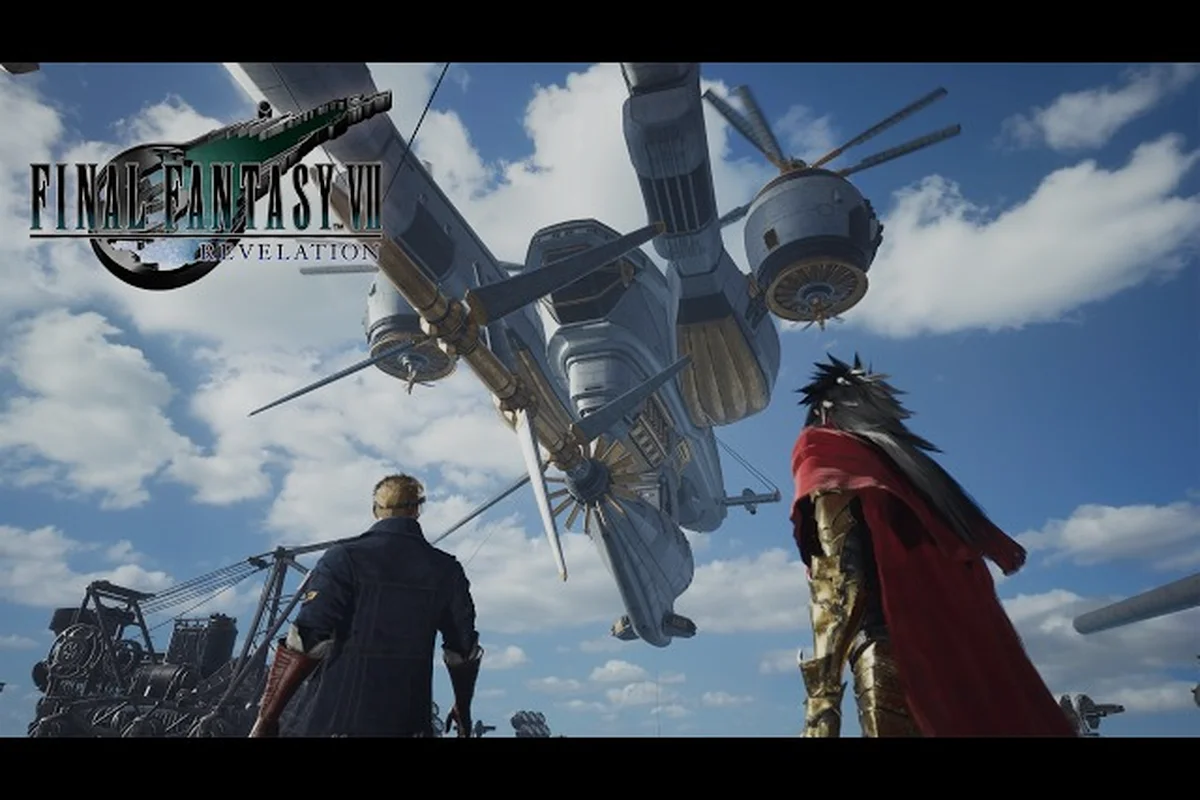
Why DLSS Support Changes the PC Experience
NVIDIA DLSS support lands in FINAL FANTASY VII REVELATION as a core part of the PC build, giving GeForce RTX owners a real path to high refresh rate play without tanking visual quality. On a standard RTX 4070, internal 4K rendering at 60 FPS already pushes the GPU close to its limit, but DLSS Quality mode can lift that ceiling toward a stable 120 FPS target, which is exactly the kind of jump that matters in a game built on cinematic boss fights, sprawling Midgar flyovers, and fast camera swings.
Upscaling is not a one-size-fits-all toggle. The Steam store listing for the game confirms that FINAL FANTASY VII REVELATION ships with multiple upscaling paths and frame generation options, and the difference between DLSS and FSR can show up as either clean edges or shimmering foliage in the Wutai mountainside depending on which renderer you pick. Players who skip these settings tend to either over-render at native resolution (and lose frames) or under-render at aggressive scaling (and lose detail), neither of which is what a remake finale deserves.
This guide breaks down the DLSS settings menu, compares DLSS vs FSR on actual hardware brackets, walks through a locked 120 FPS path on GeForce RTX 40-series cards, and covers the edge cases where frame generation can hurt more than help. By the end, you will know exactly which mode to pick for your card, your monitor, and the kind of combat you prefer.
DLSS Support Overview in FINAL FANTASY VII REVELATION
What DLSS Actually Does in This Build
DLSS support in FINAL FANTASY VII REVELATION uses NVIDIA's Transformer model, which was added to the DLSS SDK in early 2025 and is the same backend powering the latest DLSS 4 updates across other AAA ports. The Transformer model improves ghosting on thin geometry (chain-link fences in the Shinra building, for example) and preserves hair detail on characters like Tifa and Yuffie, where older CNN-based versions would blur individual strands. According to the official Steam store page, DLSS is positioned as the primary upscaling path, with FSR as a fallback for AMD and Intel Arc users.
DLSS Modes and What They Cost
The in-game menu exposes four DLSS modes plus a fifth option for native rendering, each with a predictable performance cost. Internal render resolution is the key number to watch, because DLSS Quality on a 4K monitor does not mean native 4K — it means an internal render of roughly 1440p that is then upscaled to 4K using temporal data from prior frames.
| DLSS Mode | Internal Render at 4K Output | Approx. Performance Cost vs Native | Best Use Case |
|---|---|---|---|
| DLAA | 3840 x 2160 | Baseline (most expensive) | Sharpest image, 60 FPS target |
| Quality | 2560 x 1440 | ~35-40% cheaper than native | 120 FPS on RTX 4070 / 4070 Ti |
| Balanced | 2240 x 1260 | ~45-50% cheaper than native | 144 FPS on RTX 4080 |
| Performance | 1920 x 1080 | ~55-60% cheaper than native | 165 Hz monitors on RTX 4060 |
| Ultra Performance | 1280 x 720 | ~70% cheaper than native | 8K output, rarely useful here |
When DLSS Support Becomes Relevant
DLSS support matters most in three concrete scenarios. First, on RTX 30-series cards, where native 4K is borderline — DLSS Quality is the difference between a locked 60 and a fluctuating 45-55. Second, on RTX 40-series cards with 120 Hz or 144 Hz displays, where DLSS Balanced unlocks the high refresh rate target without a major image quality hit. Third, on RTX 50-series owners who want both 4K and frame generation, since DLSS Frame Generation needs an internal render of at least 1080p to generate reliable intermediate frames.
FSR Support and DLSS vs FSR in Practice
FSR Support as a Cross-Vendor Option
FSR support in FINAL FANTASY VII REVELATION comes via FSR 3.1, which is the version AMD shipped in early 2025 with improved upscaling quality and a more stable frame generation cadence. Unlike DLSS, FSR runs on any DX12 GPU including Radeon RX 6000/7000 series, Intel Arc Alchemist and Battlemage, and even older NVIDIA cards that predate RTX. The trade-off is that FSR does not have access to dedicated tensor cores, so its upscaling is more of a spatial-temporal approximation than a true neural reconstruction.
DLSS vs FSR Side-by-Side
The difference between DLSS and FSR is most visible in three categories: motion clarity during combat, foliage rendering in outdoor areas, and hair/face detail during close-up cutscenes. Community testing across the prologue and the Honey Bee Inn sequence shows the patterns below, which match the trade-offs reported by players on the Steam Community discussions for the title.
| Visual Category | DLSS Quality (RTX 4070) | FSR 3.1 Quality (RX 7800 XT) | Native 4K |
|---|---|---|---|
| Combat motion clarity | Clean, minimal ghosting | Slight ghosting on particle effects | Perfect (heaviest GPU load) |
| Foliage in Wutai | Stable, some shimmer on edges | More visible shimmer on palm leaves | Perfect |
| Hair/face detail in cutscenes | Near-native sharpness | Soft on individual strands | Native sharpness |
| Performance uplift vs native | +55-65% | +40-50% | Baseline |
| Frame generation support | DLSS Frame Gen (RTX 40+) | FSR 3 Frame Gen (any DX12) | N/A |
When FSR Is the Right Pick
Pick FSR over DLSS if you are running an AMD Radeon card, an Intel Arc GPU, or an older NVIDIA GTX series card that does not have RTX tensor cores. FSR 3.1 Quality is competitive with DLSS Balanced in static scenes and falls behind in motion-heavy combat, but the frame generation cadence in FSR 3.1 is noticeably steadier than the older FSR 2.x frame pacing, which makes FSR 3.1 a solid secondary path. The one place to avoid FSR is during long cutscenes with subtle facial animation, because the upscaling artefacts on Tifa's eyebrows will pull you out of the moment faster than any frame rate gain can compensate.
Frame Generation, High Refresh Rate, and the Locked 120 FPS Path
How Frame Generation Works in This Game
Frame generation in FINAL FANTASY VII REVELATION is split into two implementations: DLSS Frame Generation for RTX 40-series and 50-series cards, and FSR Frame Generation for any DX12 GPU. Both work by inserting a synthetic intermediate frame between two rendered frames, effectively doubling the perceived frame rate without doubling the GPU's actual workload. The catch is that frame generation adds latency, because the intermediate frame is generated after the next real frame is already in the pipeline, and that round trip can be 15-30 ms depending on the title and the GPU.
For a turn-based or action RPG with predictable combat windows, that latency is rarely a problem. For tight parry timing against Sephiroth-style bosses, it can feel sluggish, which is why competitive players often disable frame generation and rely on raw frame rate alone. There is also a third option called DLSS Multi Frame Generation that the DLSS 4 SDK exposes, which generates up to three frames per real frame on RTX 50-series, but the FINAL FANTASY VII REVELATION build currently exposes only the single-frame DLSS Frame Gen path based on community testing as of late August 2026.
High Refresh Rate Targets by GPU Tier
Picking the right high refresh rate target means matching your GPU to the internal render and the upscaling mode. The table below assumes a 2560 x 1440 or 4K display and aims for stable frame delivery without dips below the target refresh.
| GPU | Display | Internal Render | Upscaling Mode | Frame Gen | Target FPS |
|---|---|---|---|---|---|
| RTX 4060 | 1080p 144 Hz | 1080p native | None or DLAA | Off | 144 |
| RTX 4070 | 1440p 120 Hz | 1440p native | DLSS Quality | Off | 120 |
| RTX 4070 Ti | 1440p 144 Hz | 1440p native | DLSS Balanced | On (DLSS) | 144 |
| RTX 4080 | 4K 120 Hz | 1440p | DLSS Quality | On (DLSS) | 120 |
| RTX 4090 | 4K 144 Hz | 1440p | DLSS Quality | On (DLSS) | 144 |
| RTX 5080 | 4K 240 Hz | 1440p | DLSS Balanced | On (DLSS) | 200+ |
| RX 7800 XT | 1440p 120 Hz | 1440p native | FSR 3.1 Quality | On (FSR) | 120 |
| RX 7900 XTX | 4K 120 Hz | 1440p | FSR 3.1 Quality | On (FSR) | 120 |
| Arc B580 | 1440p 60 Hz | 1440p native | FSR 3.1 Quality | Off | 60 |
The Locked 120 FPS Setup on RTX 4070
The 120 FPS target is the sweet spot for most PC players because it matches the 120 Hz cap on popular 4K and 1440p displays, doubles the cinematic 60 FPS experience, and keeps frame generation latency manageable. Here is the locked path based on community testing as of late August 2026.
First, set your monitor refresh rate to 120 Hz in Windows Display Settings and confirm the in-game frame rate cap also reads 120, because mismatches between Windows and the in-game cap can cause VSync stutter. Second, switch the upscaling dropdown to DLSS Quality and leave frame generation off for the first pass, so you can confirm the base render is solid before adding latency. Third, run the Honey Bee Inn benchmark or the Wutai training grounds as a 5-minute stability test, because those two zones are the most GPU-heavy in the prologue and will reveal any thermal throttling.
Once the base is stable at 120 FPS with frame gen off, enable DLSS Frame Generation and re-test. If the average holds at 120 and the 1% lows stay above 95, the setup is locked. If the 1% lows drop into the 70s, drop back to DLSS Balanced with frame gen on, which is usually the more stable combination on RTX 4070 cards with GDDR6X running hot. For a deeper walkthrough of the broader graphics settings, the FF7 REVELATION graphics settings guide covers ray tracing, shadow quality, and the texture streaming pool that also affect this path.
Step-by-Step DLSS Setup Walkthrough
Enabling DLSS in the In-Game Menu
The DLSS settings live under Settings > Display > Upscaling & Frame Generation, which is the same menu path used by the FF7 REVELATION ultrawide and HDR guide at ff7-revelation-is-the-pc-port-good. The default on first launch is usually DLSS Quality with frame generation off, but checking the actual selection matters because some HDR presets reset the upscaling dropdown.
The setup sequence is short but the order matters. Start with the upscaling mode, then set the frame generation toggle, then verify VSync behavior in the same menu, and finally confirm the frame rate cap under Settings > Display > Frame Rate. Changing the frame rate cap after enabling frame generation can cause a momentary stutter that some players mistake for instability, so lock the cap first and only then iterate on the upscaling mode.
Verifying the DLSS Pipeline Is Active
After enabling DLSS, you can confirm it is actually running using NVIDIA Inspector or the GeForce Experience overlay, both of which report the active upscaler and the internal render resolution. If the overlay shows FSR instead of DLSS despite your menu selection, the most common cause is a corrupted settings profile in Documents > My Games > FINAL FANTASY VII REVELATION > Saved > Config > WindowsNoEditor, and deleting the GameUserSettings.ini file forces the game to regenerate it on next launch with defaults.
Another useful diagnostic is the NVIDIA Frame View overlay, which separates base FPS from generated FPS. If you see a base of 60 and a total of 120 with frame gen on, the pipeline is working. If you see a base of 60 and a total of 60 with frame gen on, the toggle did not apply and you need to restart the game client. The toggle occasionally fails to apply if the game is launched in borderless windowed mode with a mismatched Windows refresh rate, which is another reason to lock 120 Hz in the OS before booting the game.
Common DLSS Pitfalls and Fixes
Five specific pitfalls show up repeatedly in community testing, and each has a known fix. The first is selecting DLSS Performance on a 4K monitor, which produces visible upscaling artefacts on the Midgar skyline during the opening flyover — the fix is to use DLSS Quality or DLAA instead. The second is enabling frame generation on a 60 Hz monitor, which generates frames the display cannot show and adds latency for no gain — the fix is to disable frame gen unless you have a 120 Hz or higher panel.
The third is leaving ray tracing on High while targeting 120 FPS, which is doable on a 4090 but unrealistic on a 4070 — the fix is to drop ray tracing to Standard or off for the 120 FPS target. The fourth is using the in-game VSync with frame generation, which can double the latency since both systems add buffering — the fix is to use G-Sync with frame gen and disable VSync, or use VSync alone with frame gen off. The fifth is the audio desync issue some players report when frame gen is enabled in a 30 FPS capped scenario — the fix is to lock the frame rate cap at 60 or 120 rather than 30, because frame gen is designed to double an already-smooth base.
Frequently Asked Questions
Does FINAL FANTASY VII REVELATION support DLSS at launch?
Yes, the Steam release includes DLSS support out of the box, with DLAA, Quality, Balanced, Performance, and Ultra Performance modes selectable from the Display menu. The official store page lists DLSS as the primary upscaling path, and community testing confirms the Transformer model is active in the shipped build.
Is FSR support better than DLSS in this game?
Neither is universally better — it depends on your GPU vendor. DLSS produces cleaner motion and better face detail because it uses RTX tensor cores, while FSR 3.1 is the only option for AMD Radeon and Intel Arc users. If you have an RTX card, DLSS is the recommended path; if you are on AMD or Intel, FSR Quality is the closest match.
What GPU do I need for a locked 120 FPS in FINAL FANTASY VII REVELATION?
An RTX 4070 with DLSS Quality at 1440p will deliver a stable 120 FPS without frame generation, and the same card at 4K with DLSS Quality plus DLSS Frame Gen will also hold 120. For 4K without frame gen at native quality, an RTX 4080 is the practical minimum. AMD users should target an RX 7800 XT for 1440p 120 FPS with FSR 3.1 Quality.
Should I enable frame generation for the 120 FPS path?
Frame generation helps most on RTX 40-series and 50-series cards pushing a 4K panel, where it effectively doubles the rendered frame rate. It is less useful on a 1440p 120 Hz monitor where the base render is already 120, and the added latency can hurt parry timing against fast bosses. The safe default is frame gen off for competitive encounters and frame gen on for exploration and cutscenes.
Can I use DLSS Frame Generation with VSync off?
Yes, the recommended setup for a 120 Hz G-Sync monitor is VSync off in the in-game menu, G-Sync on in the NVIDIA control panel, and DLSS Frame Generation on. This combination delivers the lowest latency path while keeping tearing off the table. If you do not have a G-Sync monitor, the alternative is VSync on with frame gen off, which caps the latency at one refresh cycle but removes the frame rate boost frame gen provides.