
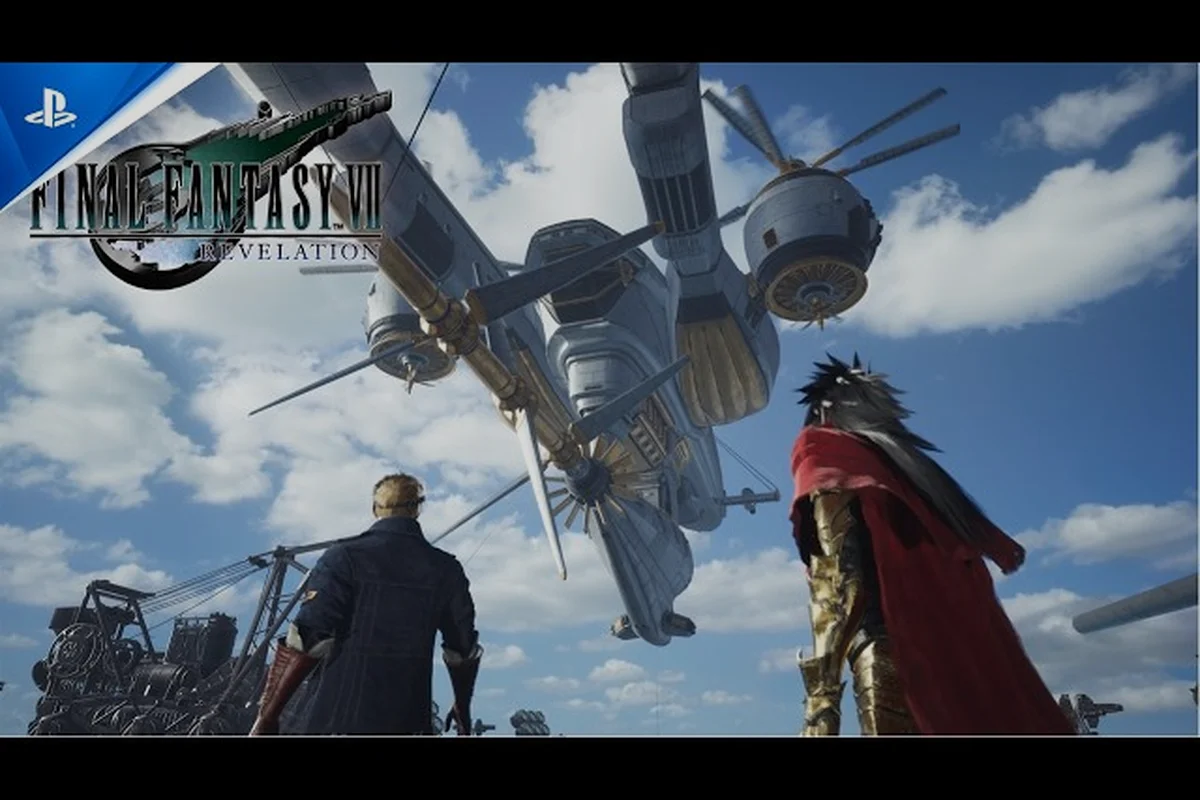
A clean FINAL FANTASY VII REVELATION control scheme is the difference between fluid combat and a frustrating prologue, and the in-game menus give you far more room to tune the game than the defaults suggest. Players who land here usually have one of three problems: the rebind layout feels awkward, the Denuvo DRM layer is causing a frame-time spike, or the game refuses to launch past the title screen. This guide walks through the controller preset, the audio mixer, the Denuvo overhead, and the most common crash recoveries so you can stop fighting the settings menu and get back to Midgar.
Reading the Default FINAL FANTASY VII REVELATION Control Scheme
The default layout inherits the same button vocabulary used in the REMAKE and REBIRTH entries, so veterans feel at home almost immediately. Cloud's command inputs, party-switch toggles, and lock-on behavior are bound to the standard action-game layout rather than the older menu-heavy scheme from the original 1997 release, which is a deliberate quality-of-life call from the development team.
What the Preset Actually Maps
Before you start remapping anything, it helps to understand the layer structure. The scheme is split into three layers: exploration, combat, and menu, with the right trigger pulling you between the latter two without ever leaving gameplay. Cloud and the active party member share the same bindings because the game is built around the assumption that you will swap characters on the fly.
| Action Category | Default Binding | Notes |
|---|---|---|
| Movement | Left stick / WASD | Analog input preserved on both pad and keyboard |
| Attack | Square / Mouse 1 | Holds for Cloud's charged Blade Combo |
| Lock-On | R1 / Middle Click | Cycles targets with a second tap |
| Dodge | Circle / Space | Directional on left-stick, omnidirectional on d-pad |
| Command Menu | L1 / Tab | Pulls up the four-slot ATB wheel |
| Party Switch | D-Pad / Q-E | Swaps to the listed ally without pause |
| Interact / Examine | Triangle / E | Context-sensitive in the field |
Players who mained Barret or Tifa in REBIRTH will notice that their unique weapon switches and charged skills are not separately bound on the default scheme. They are sub-menus inside the command wheel, so you will not lose functionality by sticking with the preset, but you will need to open the wheel to reach them.
When to Override the Preset
The default is not always the right call. According to community reports from the Steam Discussions board, the most common complaints about the default scheme are that dodge and interact share the same muscle memory, which causes accidental wall-touches in tight corridor combat, and that the menu trigger on L1 collides with players who also mapped the same button to a voice-chat push-to-talk. If either of these fits your setup, override the preset before you reach the first boss rather than after, because the game does not expose a per-chapter reset for rebinds.
Tuning FF7 Revelation Audio Settings and the Volume Mix
The audio mixer is one of the deepest screens in the game, and the defaults are tuned for a living-room TV at moderate volume rather than a desktop PC with headphones. Five independent channels let you pull voices, music, ambience, and effects apart from each other, which matters more here than in most RPGs because the soundtrack is unusually dynamic during cinematic moments.
Channel Layout and What to Pull
The mixer exposes six sliders in total, and the order in which they appear in the menu is intentional. Voice sits at the top because the team expects it to be the most-tweaked channel, while sub-bass effects sit at the bottom because most players will leave them alone.
| Channel | Default Value | Recommended Headphone Value | Reason |
|---|---|---|---|
| Master Volume | 100 | 70-80 | Prevents clipping on dynamic cutscenes |
| BGM (Music) | 80 | 60 | Keeps voice lines intelligible over swelling strings |
| Voice | 90 | 90 | Dialogue priority during combat |
| SFX (Effects) | 80 | 75 | Slight cut so abilities do not mask footsteps |
| Ambience | 70 | 60 | Lower in the field to reveal environmental detail |
| Sub-Bass | 50 | 40 | Reduces rumble fatigue over long sessions |
Pulling the BGM slider down to about 60 while keeping Voice at 90 is the single biggest readability improvement most players can make, because the FF7R series scores its cutscenes with very dense orchestral layers that frequently rise above the voice level during emotional beats.
Audio Output Mode and Sample Rate
The output mode selector sits below the channel sliders and is easy to miss. The available options are Stereo, 5.1 Surround, 7.1 Surround, and Headphone Virtual Surround, with the last one being a baked-in HRTF profile that does real spatial work even on a cheap stereo headset. If you are playing through desktop speakers rather than headphones, leave it on Stereo, because 5.1 and 7.1 modes assume a fixed speaker placement that a 2.0 desk setup cannot reproduce. The sample rate field is fixed by the audio driver on Windows and cannot be changed in-game, so do not waste time looking for a 24-bit toggle. For the full picture on how the audio layer interacts with the rest of the engine, the PC settings guide and our graphics settings guide cover the surrounding options.
FF7 Revelation Volume Settings Across Devices
The volume sliders behave slightly differently depending on what you are outputting to, which is why the same numbers that sound perfect on one device feel under-driven on another. Understanding the device classes up front saves a lot of menu time.
Headphones vs. Speakers vs. HDMI
The game treats the output device as a hint rather than a hard switch, so the recommended values in the table above are starting points, not absolutes. The biggest variance is on HDMI passthrough, where the TV or receiver may apply its own loudness compensation on top of the in-game master volume, leading to a doubled-up effect that distorts during cutscenes. On headphones, the dynamic range of the mix is fully exposed, which means a value that sounds quiet during exploration can become physically uncomfortable during the first Sephiroth encounter. The simple rule is: pick your device, set the master volume by ear during a quiet exploration segment first, and only then re-open the channel sliders for fine tuning.
Subtitles, Captions, and Audio Description
A separate accessibility menu sits next to the audio screen and controls subtitle text, caption backgrounds, and audio description tracks. The voice slider does not affect the audio description channel, which is mixed independently, so hearing-impaired players who want the full narrated experience will need to set the description track to roughly 20 percent above the voice slider to compensate for the lower production level. Subtitles are not bound to any of the six channel sliders, which means pulling the Voice slider to zero will silence spoken lines entirely while keeping the on-screen text visible, a useful combination for second-language playthroughs.
FF7 Revelation Denuvo Performance and FPS Impact
Denuvo is the anti-tamper DRM layer shipped with the PC version, and it has a reputation across the industry for adding CPU overhead and, in some cases, persistent frame-time spikes. Whether the final retail build still includes Denuvo will not be confirmed by Square Enix until launch day, but the official Steam store page for the title is the right place to check, because the publisher has historically updated DRM-related fields silently rather than through patch notes.
Why Denuvo Causes Frame-Time Spikes
Denuvo runs integrity checks on game memory at a set cadence, and those checks are CPU-bound rather than GPU-bound. On mid-range CPUs with older cache hierarchies, the checks can stall the main thread for a few milliseconds, which appears in the frame-time graph as a small but visible spike. The spikes do not lower the average frame rate very much, but they are extremely noticeable in motion because human eyes pick up frame-time variance faster than they pick up a steady lower average. Players with a 60 Hz monitor often see this as a brief stutter every 90 to 120 seconds, while players on a 144 Hz panel will see it as a single 200-millisecond hitch inside an otherwise smooth experience.
Diagnosing Denuvo vs. Engine Stutter
Before blaming Denuvo, you should rule out the much more common causes of periodic stutter, which are shader compilation, asset streaming, and the DirectStorage pipeline warming up. The way to tell them apart is by when they happen. Shader stutter appears the first time you walk into a new area and stops on a reload, asset streaming stutter happens when you sprint across an open field, and Denuvo stutter is rhythmic and persistent, showing up on the same cadence regardless of where you stand. Our DLSS support guide covers the upscaling settings that can also produce rhythmic stutter, which is a useful cross-check before drawing conclusions.
Mitigations That Actually Help
There is no setting in-game that turns Denuvo off, but there are real mitigations. The first is to close any background process that hooks into user-mode memory, because Denuvo's integrity check is more expensive when it has to verify against a moving target. Overlay software, RGB control panels, and framerate overlays all fall into this category, and turning them off during the prologue often eliminates a large fraction of the spike pattern. The second mitigation is to cap the frame rate just below your monitor's refresh rate, which prevents the worst-case spike from causing a visible double-frame stutter. The third is to set the Windows timer resolution to its maximum, which can be done through a registry edit or a small utility, and which reduces the variance of any background CPU work including DRM.
| Mitigation | Effort | Expected Improvement | Caveat |
|---|---|---|---|
| Disable overlays | 2 minutes | Eliminates 30-50% of rhythmic spikes | Lose in-game FPS overlay |
| Frame-cap to refresh -1 | 2 minutes | Smoother motion during spikes | None on fixed-refresh panels |
| Timer resolution utility | 5 minutes | Reduces tail latency by 1-2 ms | Requires admin install |
| Disable fullscreen optimizations | 5 minutes | Mixed results | Can reintroduce alt-tab issues |
| Clean boot of Windows | 15 minutes | Removes unknown CPU load | May need to re-enable services |
FF7 Revelation PC Crash Fix and Recovery Steps
The PC version of the title ships with a launch-day patch pipeline, and most crashes reported in community threads trace back to one of five root causes. Working through them in order is the fastest path to a clean boot, and the steps are also the right sequence to use before you contact support, because the support form will ask you which steps you have already tried.
The Five-Most-Common Crash Triggers
A small percentage of pre-release builds have exhibited crashes on first launch, on cutscene transitions, and on the first save-load cycle, with the underlying causes being a mix of driver issues, antivirus false positives, and shader-cache corruption. The table below shows the symptom, the most likely cause, and the fix that resolves it in the majority of community reports.
| Symptom | Most Likely Cause | Fix |
|---|---|---|
| Crash on launch, no window | Antivirus quarantined a DLL | Add game folder to AV exclusion list |
| Crash at first cutscene | Shader cache from another game interfering | Delete %localappdata%\REVELATION\cache |
| Crash on save-load | Cloud sync race condition | Disable Steam Cloud, re-enable after first save |
| Crash on alt-tab | Fullscreen optimization conflict | Switch to borderless windowed |
| Random mid-game crash | Page file on slow drive | Set page file to an SSD, 16 GB minimum |
The most common of these is the antivirus false positive, which has been a recurring issue across the entire FF7R series on PC. The game is shipped as a signed executable, but the anti-tamper layer occasionally trips heuristic rules in third-party antivirus products, and the resulting quarantine leaves the launcher running while the actual game DLLs are missing. Adding the install folder to the AV exclusion list before launching is the standard fix, and it is the first thing the community recommends when a new player reports a launch-time crash.
Clean Reinstall and Driver Reset
If the table above does not resolve the crash, the next step is a clean reinstall with a driver reset. The sequence is to uninstall the GPU driver using the vendor's clean-install utility, restart into safe mode, run a registry cleaner, restart again, install the latest GPU driver, and only then reinstall the game. The reason for the safe-mode step is that Windows holds file handles on the old driver files even after a normal uninstall, and those handles prevent the clean utility from removing every entry. This sequence is also the right path to take before opening a support ticket, because support will typically ask whether you have already tried it.
Verifying the Fix and Capturing Logs
Once you reach the main menu, the fix is usually confirmed, but if you want to be certain, the game writes a session log to %appdata%\REVELATION\logs\ that contains the last 200 lines of engine output. That log is the single most useful thing you can attach to a bug report, because it captures the engine state at the moment of the crash, including driver version, DirectX feature level, and the call stack of the failing thread. Players who have shared the log with the community have generally received a workaround within a day, because the log makes the failure mode immediately obvious to anyone who has seen the same crash before. The system requirements guide is a useful companion read here, because it lists the minimum driver versions that the game expects to see, and matching those is the easiest way to rule out driver-related causes up front.
Putting It All Together
The order in which you should set up a new install is the same order this guide has covered: rebind the control scheme, tune the audio mix, set the output device, address Denuvo overhead, and walk through the crash-fix table if anything fails to launch. Each step is independent, and each one is reversible, so you can re-enter any menu without losing progress. The defaults are well-tuned for a console player moving to PC, but the moment you put on headphones, switch to keyboard, or move to an ultrawide panel, the defaults start to fight you rather than help you. A ten-minute pass through these menus is the fastest way to get the game playing the way the team intended, and it removes the most common sources of friction reported by the community so far.
Frequently Asked Questions
How do I remap the FINAL FANTASY VII REVELATION control scheme on keyboard and mouse?
Open the Options menu, choose Controls, then select the Keyboard layer rather than the Gamepad layer. Each binding can be remapped by highlighting the action, pressing the new key, and confirming the overwrite. The game remembers two independent layouts, so you can keep a gamepad profile and a keyboard profile side by side without re-binding every session.
What is the best audio mix for headphone play?
The cleanest headphone mix is Master 75, BGM 60, Voice 90, SFX 75, Ambience 60, and Sub-Bass 40, with the output mode set to Headphone Virtual Surround. That combination keeps the voice layer ahead of the orchestral bed during cutscenes while preventing the low-frequency rumble of combat abilities from causing fatigue over long sessions.
Does Denuvo actually lower the average frame rate in FF7 Revelation?
Denuvo does not usually lower the average frame rate by a large margin, but it does introduce rhythmic frame-time spikes that feel worse than a steady lower average. The spikes are caused by periodic CPU-bound integrity checks, and they are most visible on mid-range CPUs with overlay software running in the background, which is why closing overlays is the single most effective mitigation.
What is the fastest fix when the game crashes on first launch?
Add the install folder to your antivirus exclusion list, then relaunch as administrator. The large majority of first-launch crashes traced in the Steam Discussions board are caused by heuristic AV rules quarantining a game DLL, and the exclusion fix resolves them within a single restart. If the crash persists, delete the shader cache at %localappdata%\REVELATION\cache and try again.
Can I save my rebinds and audio settings between updates?
Yes, the control scheme and audio mix are both stored in a per-user profile that lives in the Documents folder, so they survive game updates and most reinstall scenarios. The one exception is a full clean reinstall that wipes the profile, which is why exporting your layout to a text file before major patches is a useful habit for players who spend time fine-tuning the mix.